Why Public Relations Is More Powerful Than Advertising in Building Brand Trust
Introduction
In today’s overcrowded digital world, consumers are exposed to thousands of advertisements every day. Banners, sponsored posts, influencer ads, video commercials—most are ignored, skipped, or distrusted.
Yet, people still trust:
-
News articles
-
Expert opinions
-
Editorial coverage
-
Independent reviews
-
Credible media mentions
This is why Public Relations (PR) has become more powerful than advertising when it comes to building brand trust.
While advertising buys attention, PR earns belief. This article explains PR vs advertising, why PR builds stronger trust, and how businesses can use PR as a long-term reputation and growth strategy.
Understanding the Core Difference: PR vs Advertising
At the most basic level:
-
Advertising is paid visibility
-
Public Relations is earned credibility
Advertising tells people what you want them to hear.
PR lets trusted third parties talk about your brand.
This single difference completely changes how audiences perceive your message.
Why Trust Matters More Than Visibility
Modern consumers are skeptical. Before buying, they:
-
Google your brand
-
Read articles
-
Check reviews
-
Look for credibility signals
A brand that appears everywhere through ads but nowhere in trusted media lacks authority. Visibility without trust leads to low conversion, weak loyalty, and poor long-term growth.
PR focuses on reputation first, which directly influences buying decisions.
Why Advertising Alone Fails to Build Brand Trust
1. Advertising Is Self-Promotional
Audiences know ads are paid. No matter how creative, ads are perceived as biased.
As a result:
-
Claims are questioned
-
Promises feel exaggerated
-
Trust remains limited
Advertising creates awareness—but not belief.
2. Ad Fatigue and Banner Blindness
People are overwhelmed by ads. Many:
-
Skip ads
-
Use ad blockers
-
Scroll past sponsored content
This reduces the emotional and psychological impact of advertising over time.
3. Short-Term Impact
Ads work only as long as money is spent. Once campaigns stop:
-
Visibility drops
-
Traffic slows
-
Momentum disappears
Advertising rarely creates lasting brand equity on its own.
Why Public Relations Is More Powerful
1. PR Builds Trust Through Third-Party Validation
When a brand is featured in:
-
News publications
-
Business portals
-
Industry magazines
The message is perceived as independent and credible.
People trust journalists more than advertisers. This makes PR one of the strongest brand trust strategies.
2. Earned Media Marketing Creates Authority
PR relies on earned media, not paid placements.
Earned media:
-
Enhances brand credibility
-
Improves reputation marketing
-
Influences public opinion
-
Strengthens thought leadership
A single strong media mention can outperform dozens of ads in trust value.
3. PR Builds Long-Term Brand Credibility
PR content stays online for years:
-
Articles rank on Google
-
Interviews are referenced
-
Stories are shared
This creates permanent digital trust assets that continue to influence audiences long after publication.
4. PR Supports Reputation Marketing
Reputation marketing focuses on how people feel about your brand.
PR helps:
-
Shape brand perception
-
Manage public sentiment
-
Control brand narratives
-
Protect image during crises
Advertising cannot repair reputation damage. PR can.
PR Benefits for Business Growth
PR delivers both direct and indirect growth benefits:
-
Higher brand trust
-
Better conversion rates
-
Increased investor confidence
-
Stronger customer loyalty
-
Improved hiring and employer branding
-
Long-term market authority
Businesses with strong PR convert faster because trust reduces decision friction.
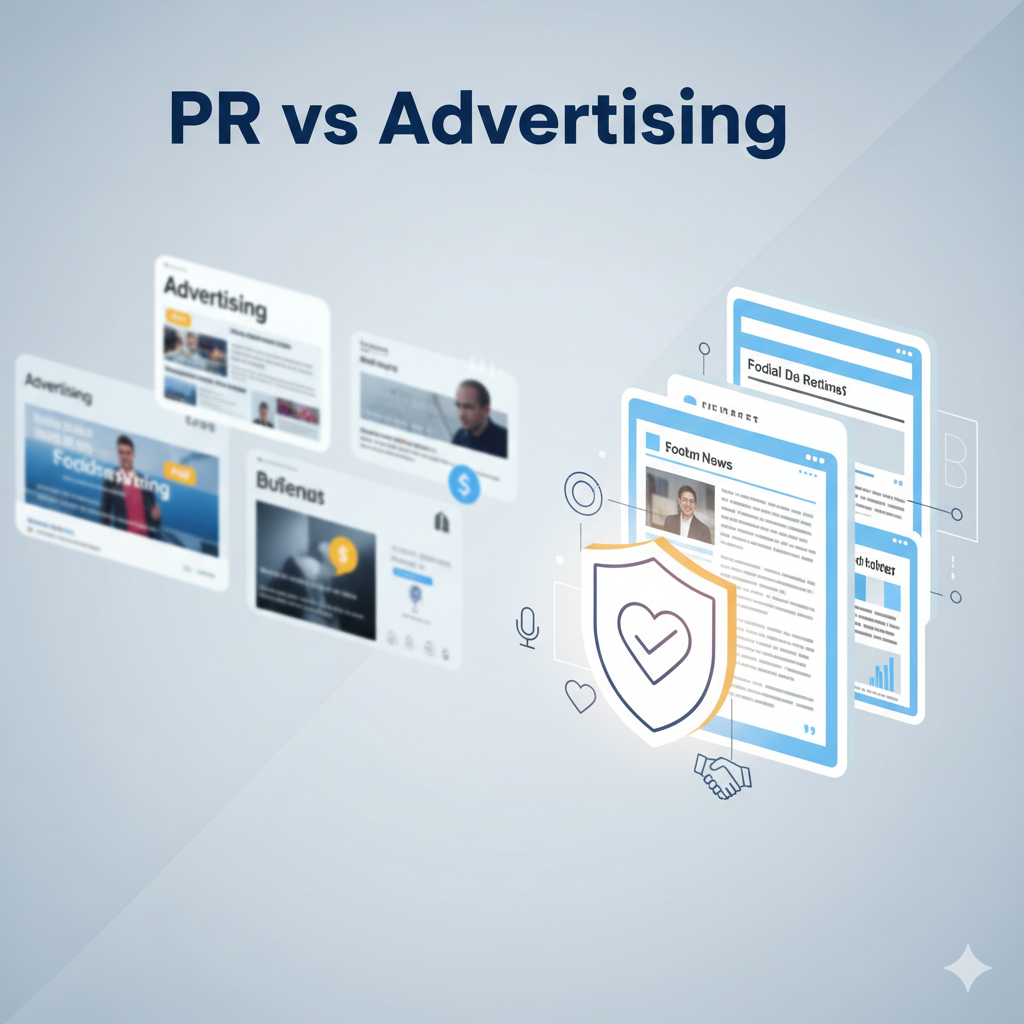
PR vs Advertising: Side-by-Side Comparison
| Factor | Public Relations | Advertising |
|---|---|---|
| Credibility | Very High | Medium |
| Trust Impact | Strong | Limited |
| Cost Model | Earned | Paid |
| Longevity | Long-term | Short-term |
| Brand Authority | High | Moderate |
| Reputation Protection | Yes | No |
The most successful brands use advertising for reach and PR for trust.
How PR Builds Brand Trust Step by Step
1. Story-Driven Communication
PR focuses on:
-
Brand journey
-
Purpose
-
Impact
-
Expertise
Stories connect emotionally and feel authentic.
2. Thought Leadership Positioning
PR positions founders and leaders as:
-
Industry experts
-
Opinion leaders
-
Trusted voices
This builds confidence not just in the brand—but in its leadership.
3. Consistent Media Presence
Repeated positive media mentions reinforce credibility over time.
Trust is not built overnight. PR works through consistent reputation building.
4. Crisis Communication & Trust Recovery
When issues arise, PR:
-
Controls misinformation
-
Communicates transparently
-
Protects brand image
Advertising cannot manage crises—PR is essential.
Earned Media vs Paid Media: The Trust Gap
Paid media says: “We are great.”
Earned media says: “Others say we are credible.”
Consumers believe the second message far more.
This is why earned media marketing plays a central role in modern brand credibility building.
Why Modern Businesses Need PR More Than Ever
In the digital era:
-
Fake news spreads fast
-
Reviews influence decisions
-
Reputation travels instantly
Businesses without PR are vulnerable to:
-
Negative perception
-
Low trust
-
Weak authority
PR acts as a reputation insurance policy.
When Advertising and PR Work Best Together
PR and advertising are not enemies. The strongest brands:
-
Use PR to build trust
-
Use ads to amplify reach
PR prepares the ground. Advertising accelerates results.
Learn more about professional PR, reputation marketing, and brand credibility solutions:
🌐 https://echorisepr.in/
Explore integrated PR and digital growth services under one ecosystem:
🌐 https://www.adfusionmedia.com
Conclusion
Advertising may create awareness, but Public Relations creates belief.
In a trust-driven market, brands that invest in PR build stronger reputations, deeper credibility, and long-term growth. Advertising speaks—but PR convinces.
For brands that want authority, loyalty, and lasting impact, PR is more powerful than advertising.